
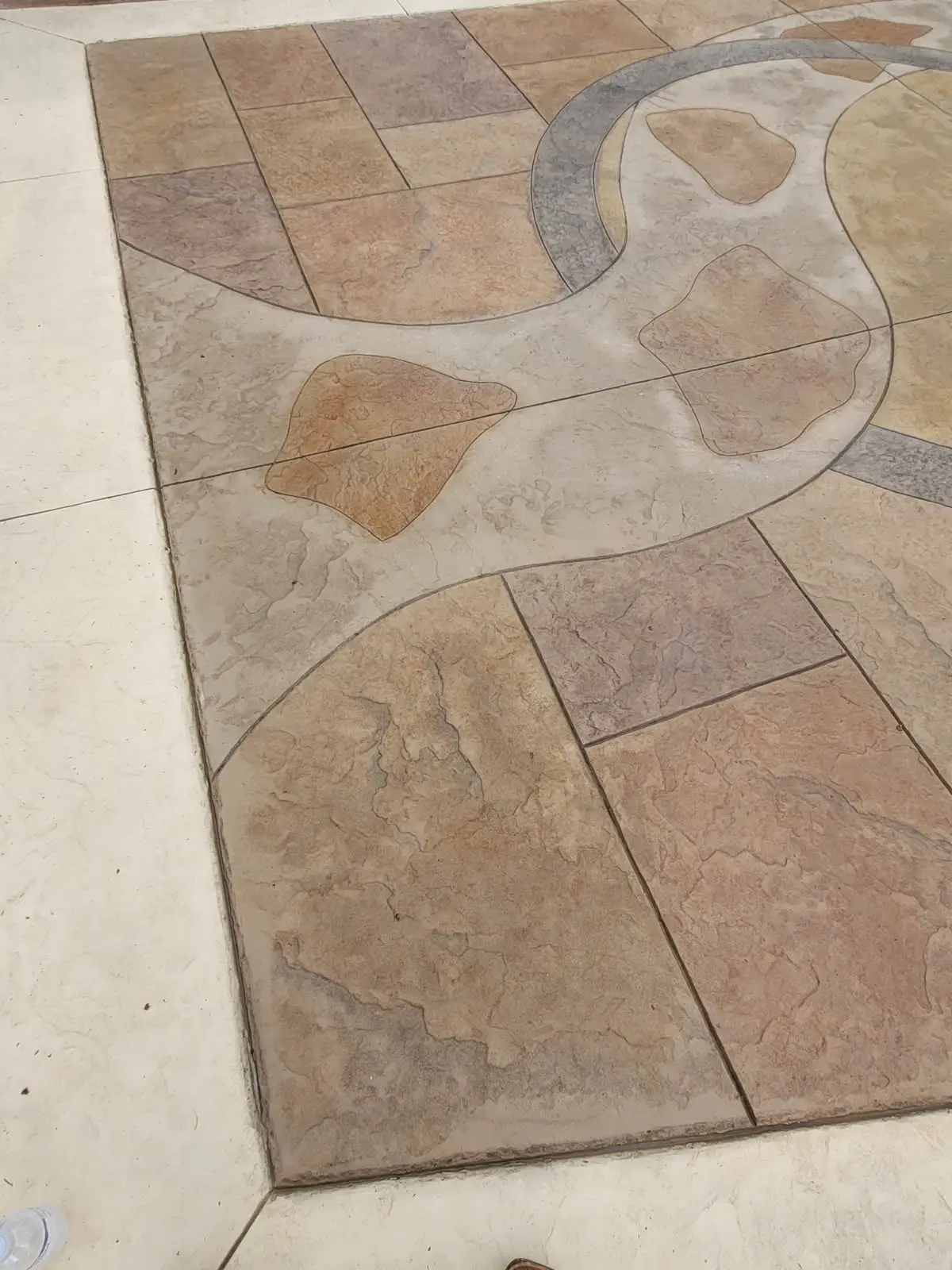
Resurface it instead of replacing it
Concrete Resurfacing & Overlays in Metro Atlanta, GA
If the slab underneath is still sound, tearing it out is money spent on a dumpster. We bond a new decorative surface over the top and give you the finish you wanted the first time.
Stampable, spray-knockdown and micro-topping systems
Custom scored patterns, borders and multi-color staining
Repairs surface spalling, discoloration and hairline cracks
Typically done in days, not weeks
Overview
New surface, same slab
Most of the ugly concrete in Gwinnett County is not broken — it is stained, weathered, spalled at the surface, or simply plain. That slab still has years of structural life in it. An overlay is a thin cementitious layer bonded to the existing surface, then stamped, sprayed, scored or stained into a finish that looks like new decorative work.
Because there is no demolition, no dumpster and no repour, the cost sits well below replacement and the schedule is measured in days. Nobody is jackhammering next to your bedroom window for two mornings, and your patio furniture goes back the same week.
The honest limitation: an overlay is a surface, not a structural repair. If your slab is heaved, sinking, rocking underfoot or cracked clean through with the sides at different heights, the sub-grade has failed and a new coat will just re-crack over the same fault. We will walk it with you and say so — half the value of calling us is finding out which category you are in.
Free estimate
Get concrete overlays priced on site
We measure, check drainage and access, put samples on the ground, and hand you a line-item price. No cost, no sales script.
- Licensed & insured
- Free on-site estimates
- Owner on every job site
- Written workmanship warranty
Mon – Fri: 7:00 AM – 6:00 PM
Saturday: 8:00 AM – 2:00 PM
Applications
What we resurface
Tired back patios
The number one overlay job: a sound but plain builder patio gets a stampable overlay in flagstone or ashlar, plus a border, and stops looking like a construction leftover.
Driveways & aprons
Resurfacing over a structurally sound drive, usually with a spray-texture or micro-topping system that adds thickness without changing garage door clearance, then scored into panels.
Pool decks
Cool-to-the-touch texture systems that fix a spalled, chalky deck and add traction where people walk out of the water. This is where resurfacing has the biggest safety payoff.
Front steps & walkways
Overlays wrap treads and risers, so worn, chipped steps come back with square edges and a texture that matches the new walk.
Porches & garage floors
Interior-grade toppings for covered porches, sunrooms and garage floors where a smooth, sealable surface matters more than pattern.
Commercial entries & patios
Restaurant patios, storefront entries and breezeways resurfaced overnight or over a weekend so the business does not lose a week of trading.
Your options
Overlay systems
Different systems solve different problems. Which one we recommend comes down to how rough the existing surface is, how much thickness the site can take, and how much pattern you want.
Stampable overlay
Roughly a quarter to a half inch of polymer-modified material, troweled on and stamped with the same texture mats we use on new pours. The closest thing to new stamped concrete without the demolition.
Spray texture & knockdown
Sprayed on in a fine orange-peel texture, then knocked down flat with a trowel. Thin, tough, excellent traction, and the standard choice for driveways and pool decks.
Micro-topping
A skim-thin coat, one to two millimeters, that resets the color and texture of a surface without adding real height. Ideal where thresholds, door swings and drain heights leave no room.
Self-leveling topping
For interiors with dips, patches and old flooring scars. It flows out flat and gives you a hard, uniform slab that can be stained, sealed or polished afterwards.
Scored & stained
Hand-cut tile, plank, ashlar or geometric layouts into the overlay, then multi-color acid stain or dye. The most custom-looking option and the one that best matches interior flooring.
Repair & seal only
Sometimes the right answer is smaller: grind out and fill the cracks, patch the spalls, clean the clay staining, and seal it. We will quote that instead of selling you a full overlay you do not need.
Process
How resurfacing goes
Slab assessment
We check for movement, hollow-sounding delamination, active cracks with vertical offset, and how much the existing surface has spalled. This determines whether an overlay is appropriate at all.
Deep clean & profile
Pressure washing alone does not create bond. We grind or shot-blast the surface to open it up, and remove any old sealer, paint or coating, because an overlay is only as good as what it grips.
Crack & spall repair
Cracks chased out and filled with polymer repair mortar, spalled areas rebuilt, and existing control joints honored so they can keep doing their job through the new surface.
Bond coat & base layer
A bonding primer, then the first pass of the overlay system worked into the profiled surface to eliminate voids under the finish.
Texture, pattern & color
Stamp, knock down, or hand-score to the layout you picked, then apply integral color, stain or dye. Borders and bands get cut in at this stage.
Cure & seal
The overlay cures, then two coats of sealer with a slip additive where it is needed. Foot traffic is usually same-day-plus-one, vehicles a few days later.
Local conditions
Georgia weather is why your slab looks like that
Surface spalling — that flaky, pitted, exposed-sand look — comes from water getting into the top few millimetres of concrete and freezing. The Atlanta metro cycles above and below freezing dozens of times each winter, which is harder on an unsealed surface than a single hard freeze would be. Overlays fix the cosmetic damage; sealing afterwards is what stops it coming back.
Red clay is the other culprit. Georgia clay stains concrete a permanent orange-brown that no amount of pressure washing fully lifts, and organic growth in shaded, humid back yards adds the grey-green film on top. Both are surface problems, which is exactly what an overlay is designed to erase.
Timing matters here too. Overlay materials need a temperature and humidity window to bond and cure properly, so we do not spray a driveway in an August thunderstorm pattern or a January cold snap. Spring and fall in Lawrenceville, Johns Creek and the surrounding north metro are the sweet spot, and we schedule around pollen season for the final seal.
Concrete Overlays service area
Based in Lawrenceville, GA, we keep the radius tight so we can come back to check a cure, seal on the right day, or fix something years later.
Gwinnett County, GA
- Lawrenceville
- Suwanee
- Duluth
- Dacula
- Grayson
- Snellville
- Lilburn
- Buford
North Fulton, GA
- Johns Creek
- Alpharetta
- Roswell
- Milton
- Sandy Springs
Outside the list? Call (404) 670-8273 anyway — we travel for larger pours.
Overlay cost versus replacement
Resurfacing usually runs a fraction of tear-out and repour on the same footprint, and the gap widens on hard-access back yards where demolition is expensive to get out. We quote both when replacement is the smarter long-term call.
- Square footage and how much of the existing surface needs repair before we can start
- Which system the site calls for — micro-topping is thinner and cheaper than a stampable overlay
- Amount of grinding or shot-blasting needed to remove old sealer, paint or coatings
- Pattern complexity: a knockdown field versus hand-scored ashlar with multi-color stain
- Number of steps, risers and vertical faces the overlay has to wrap
- Sealer system and whether a slip-resistant additive is required
Making an overlay last
We hand this over in writing at the walkthrough, along with the cure and sealing schedule for your specific job.
- Reseal every two to three years — the sealer is the wear surface on any overlay.
- Wash with a mild cleaner and a soft brush; skip aggressive pressure-washer tips on overlay surfaces.
- Avoid metal shovels, dragged furniture and chloride deicers, which are all harder on a thin surface than on a slab.
- Keep downspouts and irrigation from dumping directly onto the overlay.
- Call us early if you see a hollow spot or a lifting edge — spot repairs are simple, ignored ones spread.
Our work
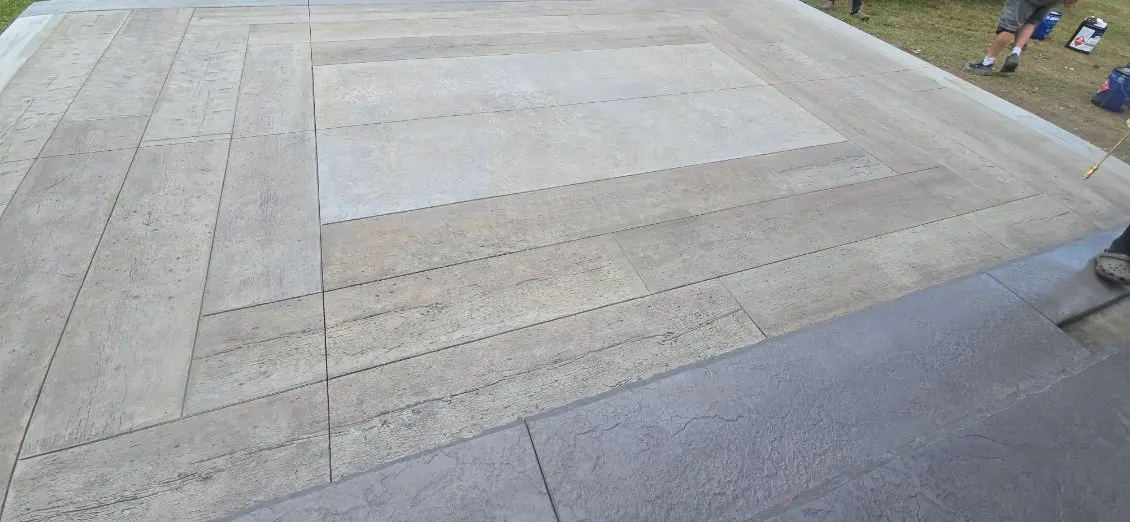
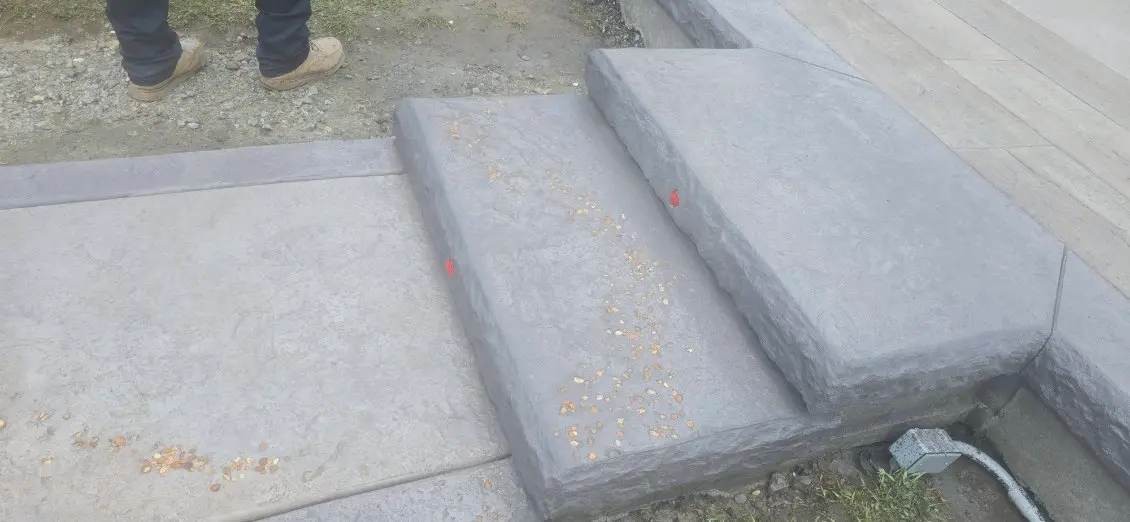
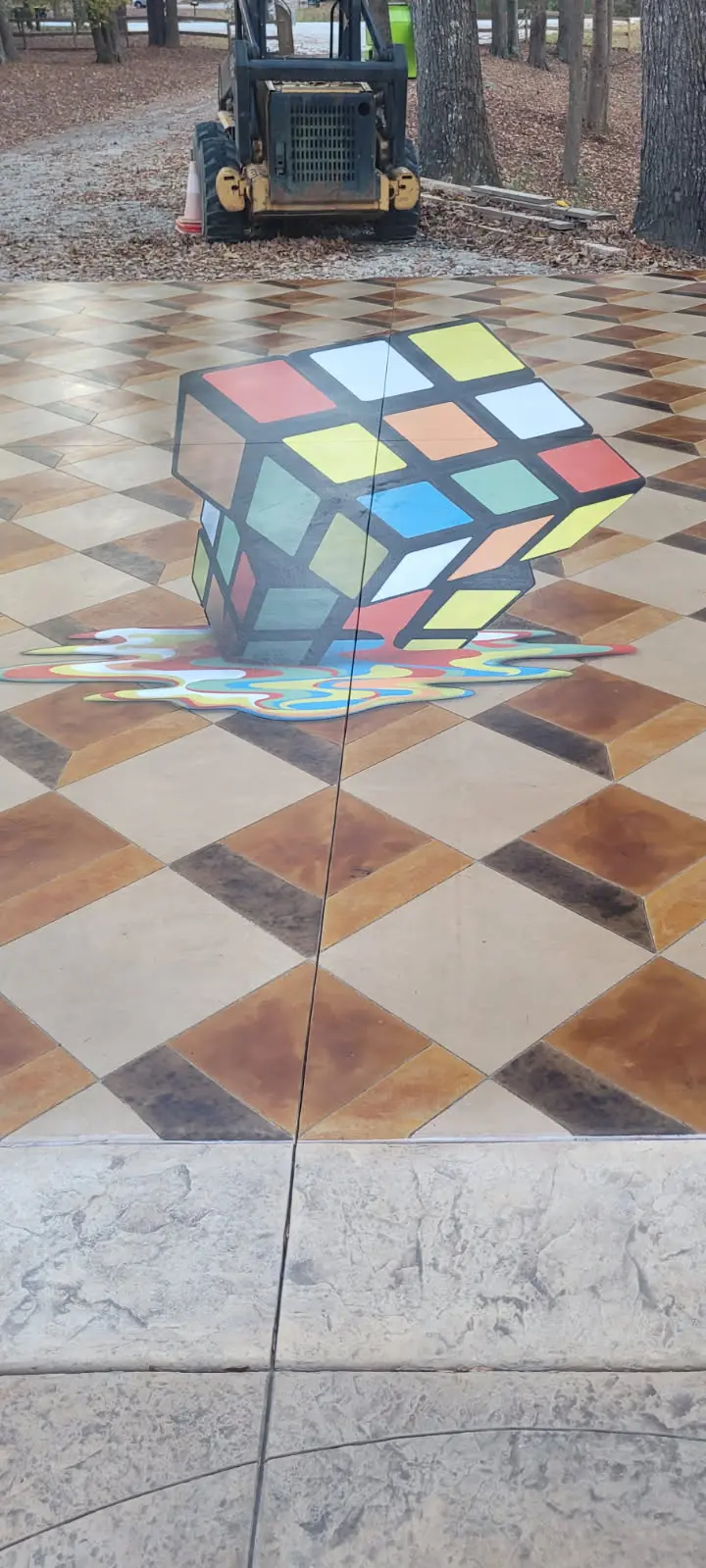
Concrete Overlays projects we've finished
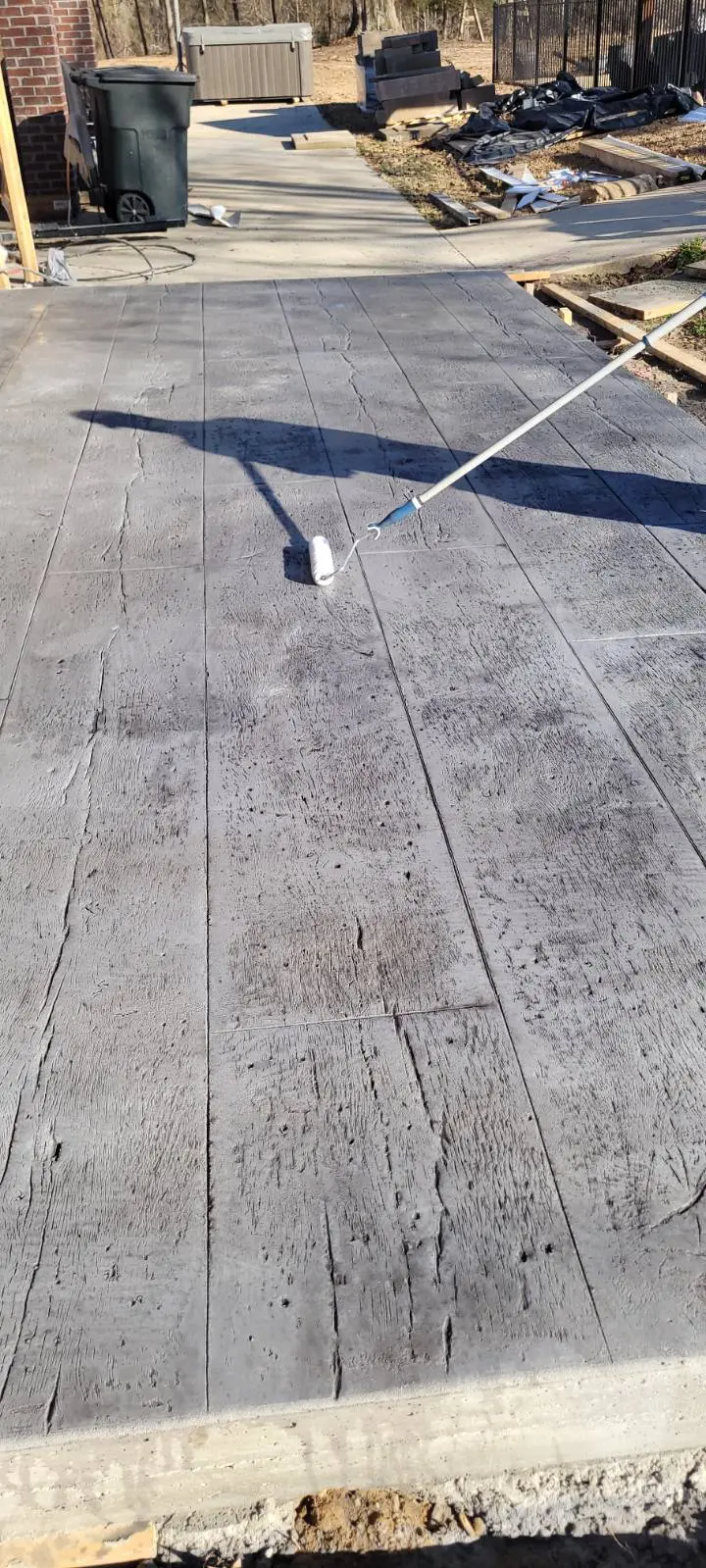
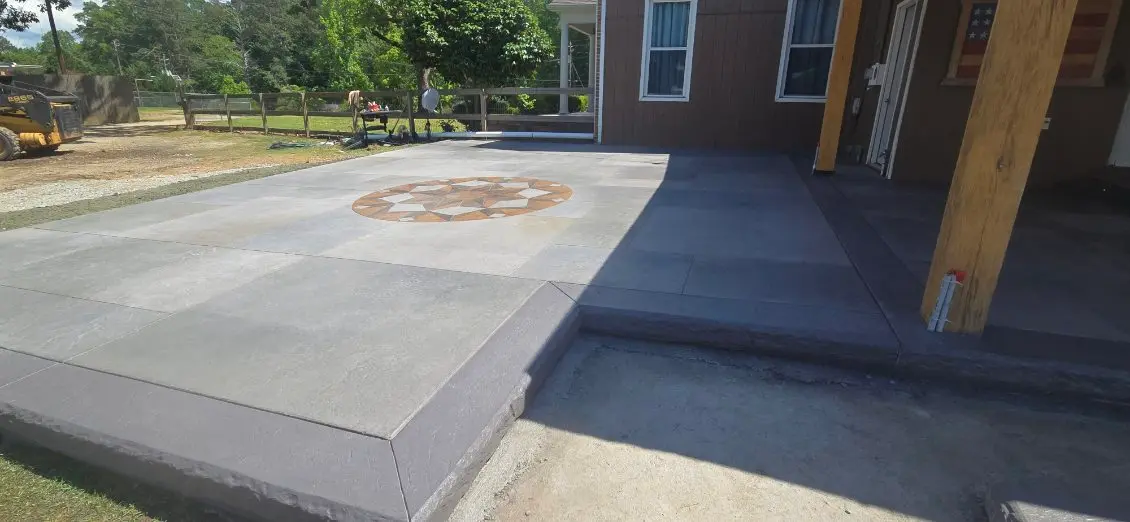
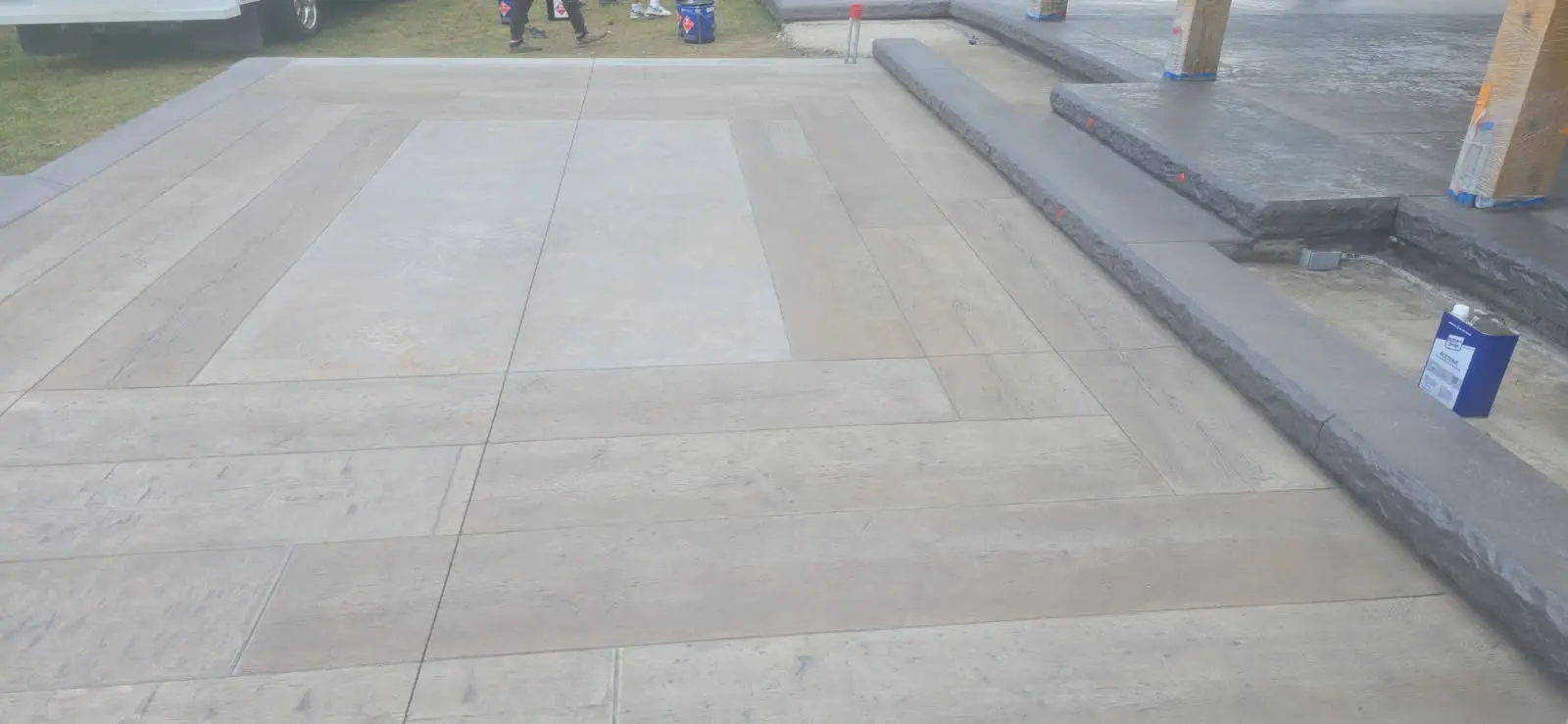
Every photo is our own crew's work across Gwinnett County and North Fulton.
Before you ask
Concrete Overlays questions
Something not covered here? Call (404) 670-8273 — you'll get a person who actually pours concrete, not a call center.
How do I know if my concrete can be resurfaced?
Good candidates are stained, weathered, surface-spalled or simply plain, with cracks that are tight and level across the break. Bad candidates rock underfoot, have sections at different heights, show cracks wider than about a quarter inch with vertical offset, or sound hollow when tapped. We check all of that on the free estimate visit and tell you honestly which side you are on.
Will the old cracks come back through the overlay?
A crack that is still moving will eventually telegraph through any surface applied over it — that is physics, not workmanship. We treat static cracks with repair mortar and reinforcing fabric so they stay hidden, and we honor existing control joints through the new surface. If a crack is active because the sub-grade is failing, resurfacing is the wrong product and we will say so.
How thick is an overlay, and will it raise my thresholds?
It depends on the system. A micro-topping is one to two millimeters and effectively invisible at doors and drains. Spray texture is a few millimeters. A stampable overlay is a quarter to a half inch, which does need to be checked against door swings, garage clearance and step riser heights. We measure those before recommending a system.
How long does resurfacing take?
Most residential patios and driveways are a two to four day job including prep, application and sealing — versus one to two weeks for demolition and a new pour. Light foot traffic is usually possible the day after the overlay goes down, with vehicles a few days later once the sealer has cured.
Is an overlay as durable as new concrete?
The finished surface is a polymer-modified material that is harder and less absorbent than ordinary concrete, so it wears well. Its durability depends entirely on bond, which is why we grind or shot-blast rather than just pressure wash, and on keeping it sealed. What an overlay does not add is structural capacity — the slab underneath is still doing the load-carrying.
Can you resurface a pool deck so it is not so hot?
Yes. Lighter colors and a knockdown texture read noticeably cooler underfoot than dark, dense concrete, and the texture gives you traction where people step out of the water. On pool decks we always add a slip-resistant additive to the sealer rather than leaving a glossy film on a wet surface.
Also worth a look
Related services
Concrete Overlays often gets paired with these on the same site visit — and we price them together so nothing gets poured twice.
Stamped Concrete
Ashlar slate, flagstone, cobblestone and wood plank textures poured, colored and sealed in one seamless slab.
View servicePolished Concrete
Diamond-ground, densified and burnished to satin, semi-gloss or mirror. Stains, dyes and custom inlays available.
View serviceTraditional Concrete
Driveways, patios, slabs and sidewalks with compacted sub-base, real reinforcement and a clean broom finish.
View service
Free estimate
Let's pour something you'll be proud of.
Send us a few details about your driveway, patio or floor and we'll come measure it, price it, and show you finish samples — free, with no pressure.
Start your project