
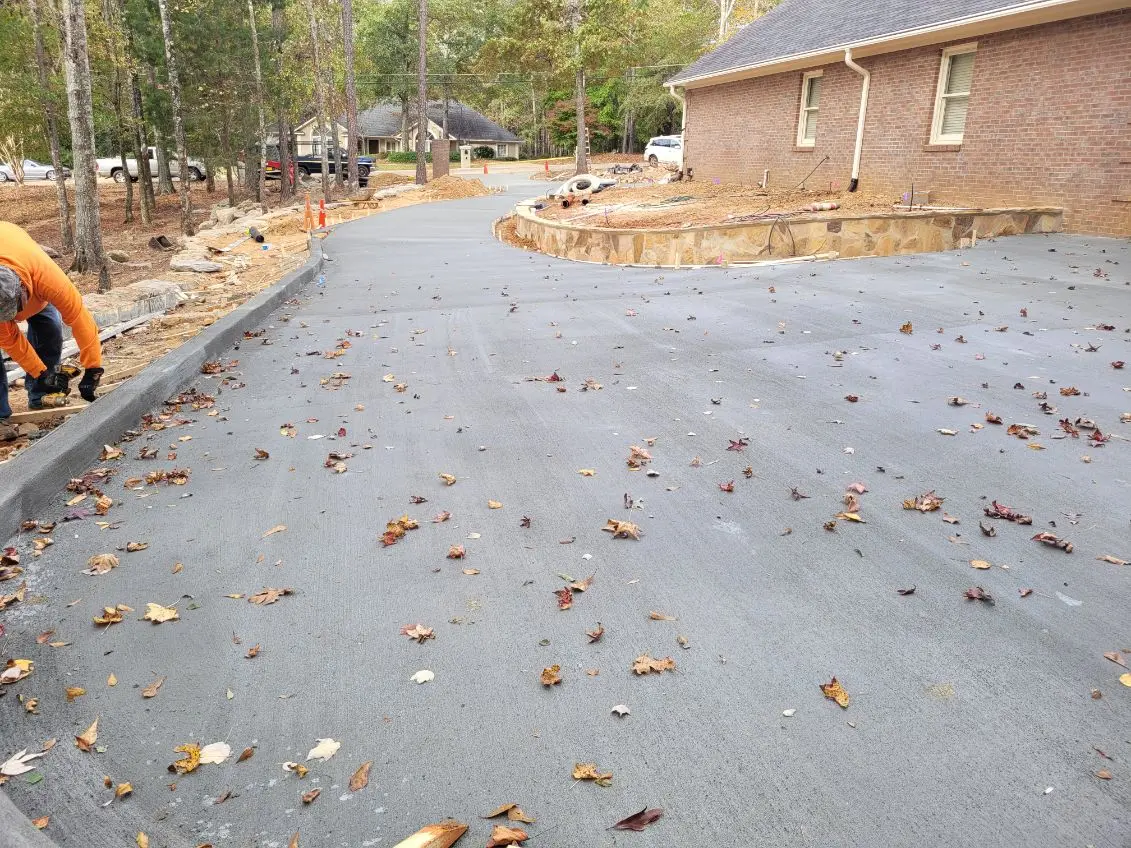
Plain grey concrete, poured properly
Concrete Driveways & Patios in Gwinnett County, GA
Plain grey concrete is the least glamorous thing we pour and the easiest to get wrong. Everything that determines whether a slab lasts thirty years happens before the truck shows up.
Graded and compacted sub-base on every pour
Rebar, wire mesh or fiber reinforcement as the job calls for
Control joints cut to spec to steer any future cracking
Tear-out and haul-away of old concrete included
Overview
The part nobody photographs
A broom-finished driveway looks the same on day one whether it was poured over a compacted, reinforced base at the right thickness or dumped four inches thick onto loose red clay. The difference surfaces in year three, and by then it is not repairable — it is a replacement.
So this is where we are pedantic. Sub-grade cut to depth and compacted in lifts. Thickness matched to the load, not to the estimate. Rebar, mesh or fiber selected for what the slab actually has to do. Control joints saw-cut on correct spacing within 24 hours of the pour. Water-cement ratio held instead of adding water at the truck to make finishing easier.
We pour residential and light commercial flatwork across Lawrenceville, Suwanee, Duluth, Dacula, Grayson, Snellville, Lilburn, Buford, Johns Creek, Alpharetta, Roswell, Milton and Sandy Springs — new work, replacements and additions tied into existing slabs.
Free estimate
Get traditional concrete priced on site
We measure, check drainage and access, put samples on the ground, and hand you a line-item price. No cost, no sales script.
- Licensed & insured
- Free on-site estimates
- Owner on every job site
- Written workmanship warranty
Mon – Fri: 7:00 AM – 6:00 PM
Saturday: 8:00 AM – 2:00 PM
Applications
What we pour
Driveways & aprons
Full replacements, extensions, widenings and turnarounds, poured at driveway thickness with reinforcement sized for vehicles — including the apron where the drive meets the county road.
Patios & walkways
Broom-finished patios, front walks and side paths, sloped away from the house and jointed so the panel layout looks deliberate instead of random.
Garage, shed & RV pads
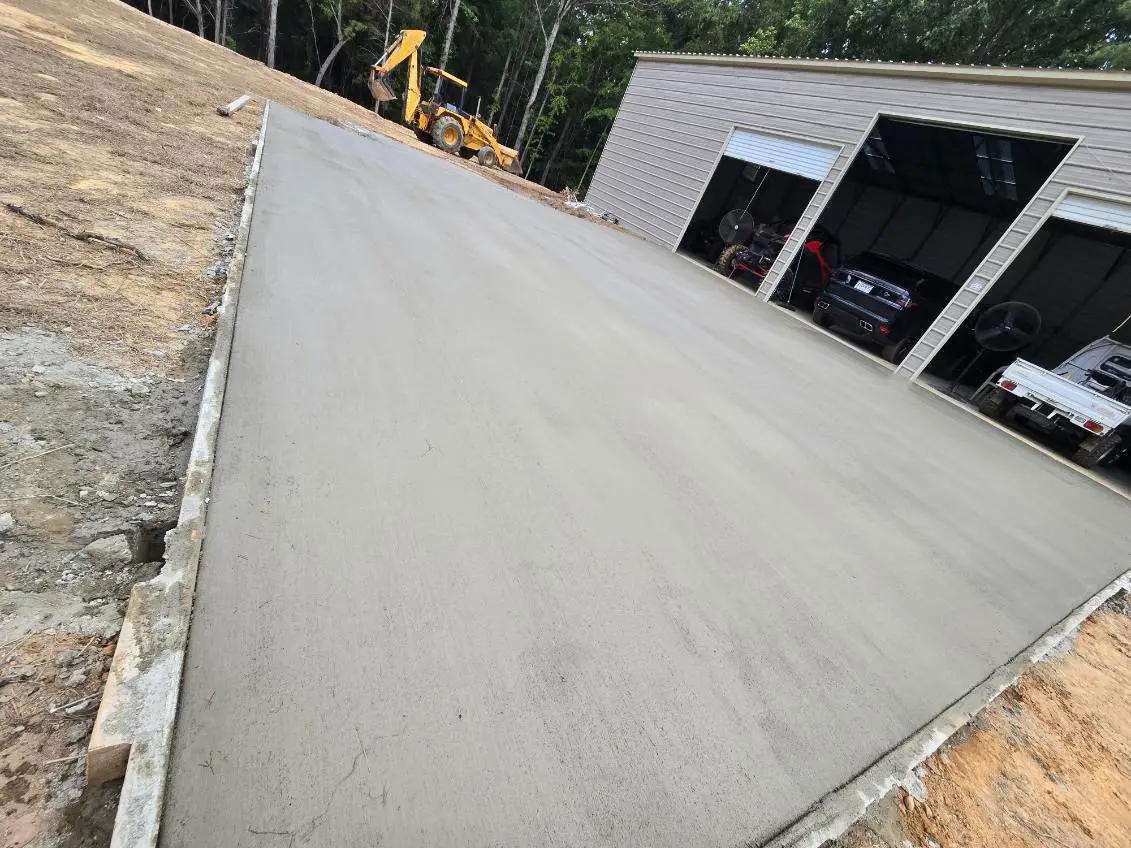
Thicker slabs with heavier reinforcement for workshops, detached garages, boat and camper parking, generator pads and HVAC pads.
Footings & foundations
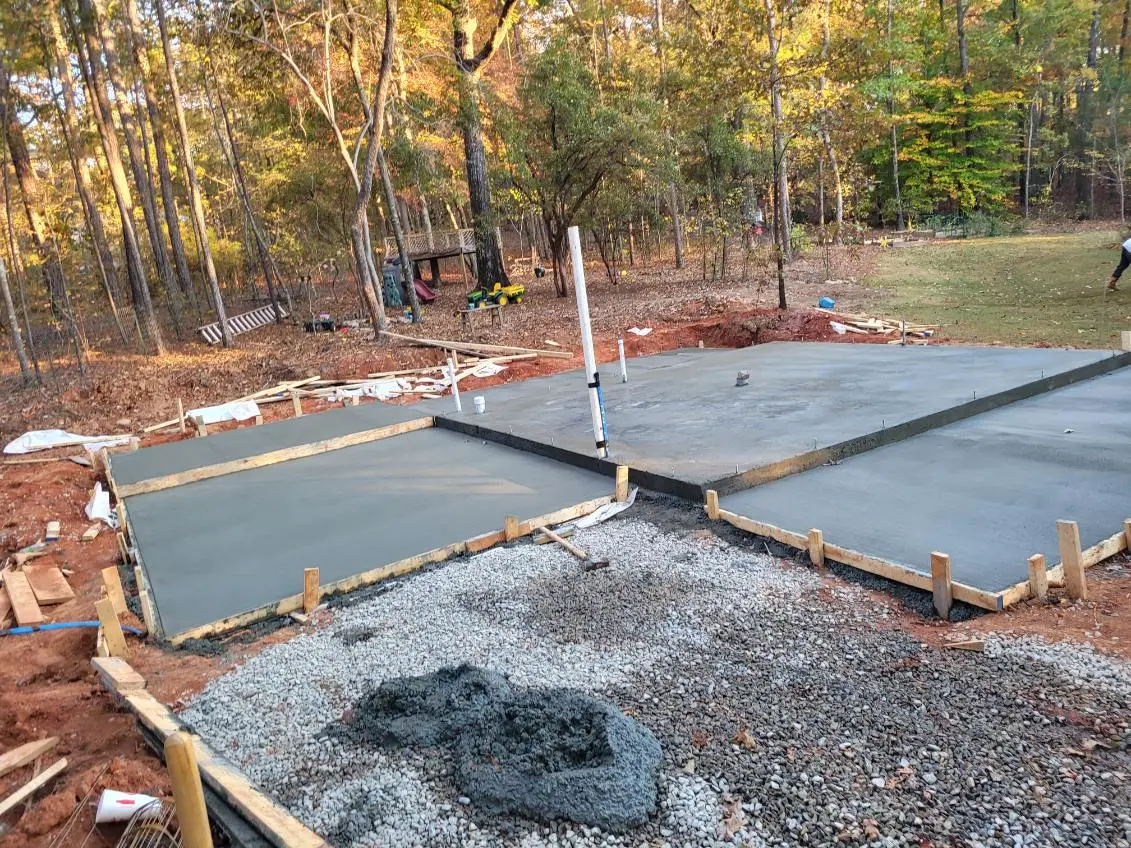
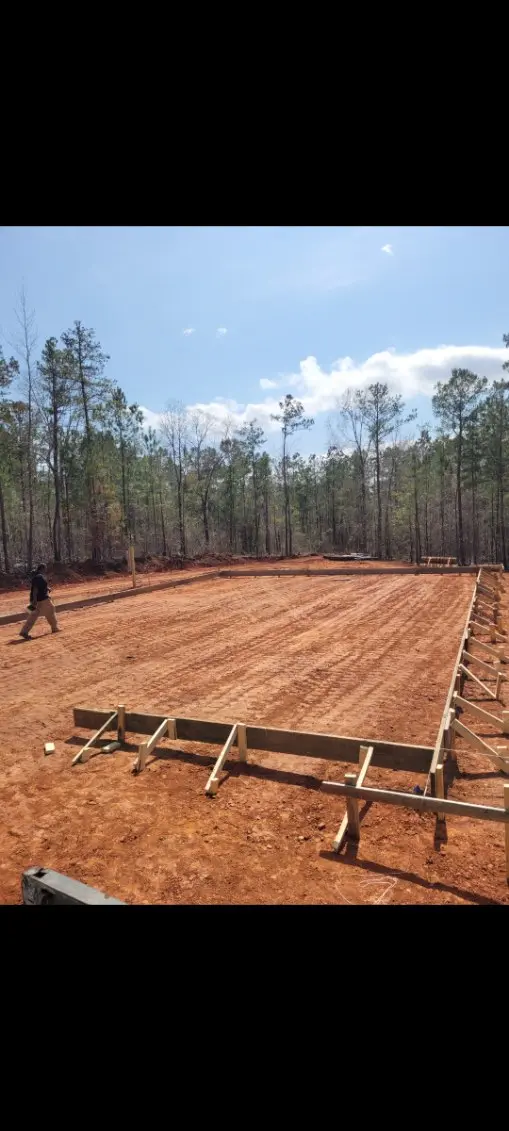
Footings, stem walls, monolithic slabs and pier pads for additions, sunrooms, garages and outbuildings, formed and inspected before we place.
Steps, stoops & curbs
Poured steps and landings on correct riser and tread geometry, plus poured curbs and edging that hold a driveway edge better than plastic paver restraint.
Commercial flatwork
Sidewalks, ADA-compliant ramps and landings, dumpster pads, equipment pads and interior warehouse slabs for local businesses.
Your options
Finish options
Plain does not have to mean generic. These are the finishes that keep a grey slab clean-looking without moving into decorative pricing.
Broom finish
The workhorse. A uniform drag texture with the grip an exterior slab needs. We keep the broom lines straight and consistent, and pull them perpendicular to the direction of traffic.
Smooth trowel
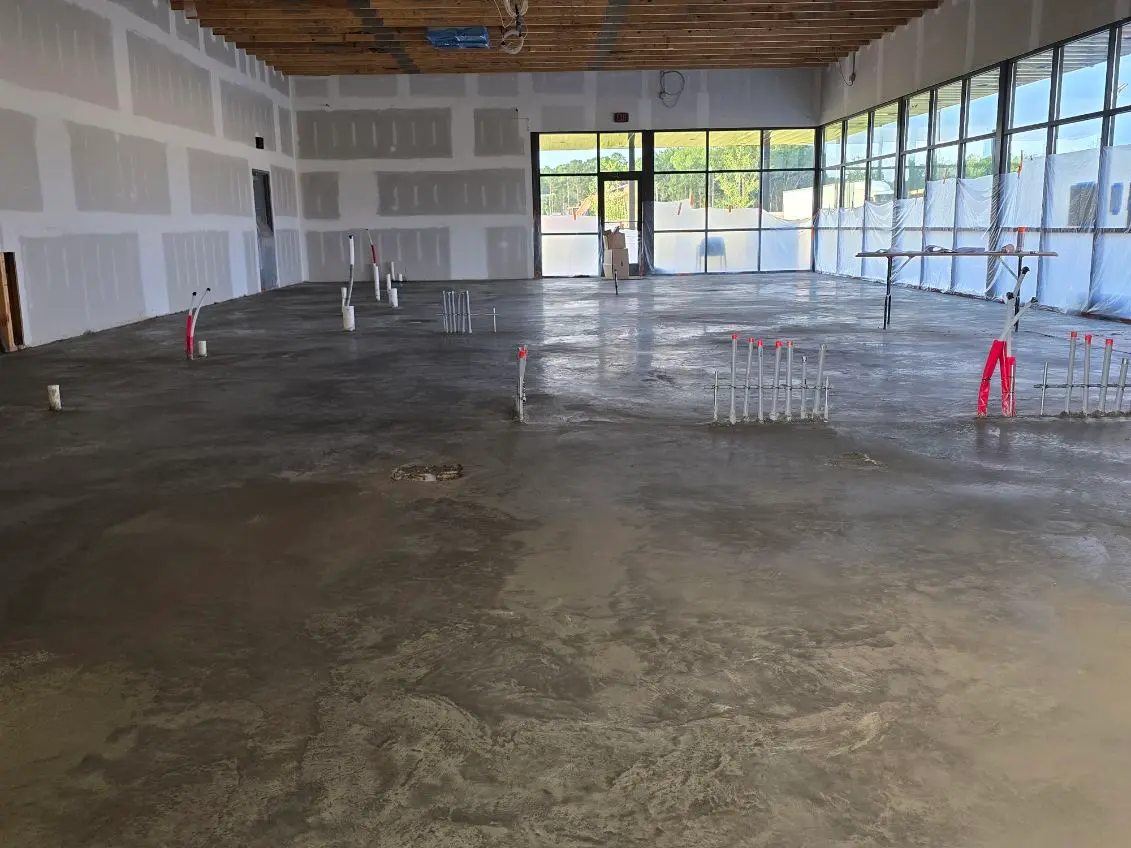
Steel-troweled and hard, for interior slabs, garages and shops — and for anything you plan to coat with epoxy or polish later.
Tooled & saw-cut patterns
Panel layouts and diamond or grid cuts that make the required control joints part of the design rather than a scar across the middle of the slab.
Integral color
Grey, charcoal or tan pigment mixed into the load. A subtle way to tie a plain slab to your roof and trim without stamping or staining.
Detail edges & bands
Clean radius edges, ribbon borders and contrasting bands cut into the field. Cheap detailing that reads as custom from the curb.
Exposed aggregate
Wash the surface paste back to reveal the stone. Excellent traction, distinctly different texture, and it hides staining better than a smooth finish.
Process
Our sequence on a flatwork job
Site walk & layout
We measure, mark the footprint, and check the two things that sink most driveways: where the water goes and how the truck gets to the pour.
Demo & haul-away
Existing concrete broken out, loaded and removed. Nothing gets buried on site and nothing gets left in your yard over the weekend.
Grade & compact
Sub-grade cut to depth, soft spots dug out and replaced with graded aggregate, then compacted in lifts. This is the step that gets skipped on cheap bids.
Forms & reinforcement
Forms set to line and grade so the finished slope is correct, then rebar on chairs, welded mesh or fiber depending on the load and span.
Place & finish
Concrete placed, screeded, bull-floated and finished the same day. We hold the mix design instead of watering it down for easier troweling.
Joints & cure
Control joints saw-cut on correct spacing inside the first day, cure applied, and clear instructions on when you can walk it and when you can park on it.
Local conditions
Why Georgia slabs fail early
Metro Atlanta sits on red clay with high plasticity. It swells when it takes on water and shrinks when it dries, and that seasonal movement is the load most residential slabs actually fail under — not vehicle weight. Compaction, reinforcement and joint spacing are how you accommodate it.
Our lots make it worse. Gwinnett and North Fulton subdivisions are cut into hillsides, so most driveways are on a grade with runoff heading straight at the garage. Getting the slope, the crown and the edge conditions right is the difference between a dry garage and an annual squeegee routine.
Add the freeze-thaw cycling the north metro gets each winter and the deicing salts that come with it, and you have a durability problem that only shows up on slabs poured thin or finished with too much water at the surface. We also pull the right-of-way and driveway permits when a job ties into a county road, so an apron pour does not become your problem with the county later.
Traditional Concrete service area
Based in Lawrenceville, GA, we keep the radius tight so we can come back to check a cure, seal on the right day, or fix something years later.
Gwinnett County, GA
- Lawrenceville
- Suwanee
- Duluth
- Dacula
- Grayson
- Snellville
- Lilburn
- Buford
North Fulton, GA
- Johns Creek
- Alpharetta
- Roswell
- Milton
- Sandy Springs
Outside the list? Call (404) 670-8273 anyway — we travel for larger pours.
What a poured slab costs
Flatwork is priced by square footage, but the number that matters is what is included underneath it. Our estimates are line-itemed so you can see exactly what you are comparing against a cheaper bid — thickness, reinforcement, base depth, demo, haul-away and joint work.
- Square footage, thickness and required reinforcement
- Demolition and disposal of the existing slab
- How much base material has to be imported or how much soft clay has to come out
- Access for the truck, pump or buggy work if the pour is behind the house
- Grade changes, retaining, drains or curbing tied into the work
- Finish choice, integral color and any decorative saw-cut layout
First-year care
We hand this over in writing at the walkthrough, along with the cure and sealing schedule for your specific job.
- Keep vehicles off for seven days, and heavy trucks or dumpsters off for 28.
- No rock salt or chloride deicers on the first winter — new concrete is most vulnerable then.
- Have it sealed in the first year and about every three after; sealed concrete resists clay and oil staining.
- Do not let sprinklers run onto the slab all summer. Constant wetting encourages efflorescence.
- Keep the edges backfilled and grassed so the soil beside the slab does not wash out from under it.
Our work
Traditional Concrete projects we've finished
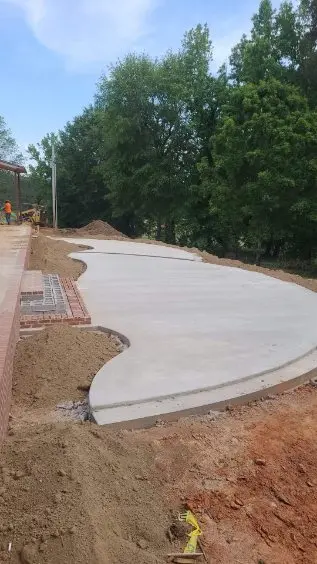
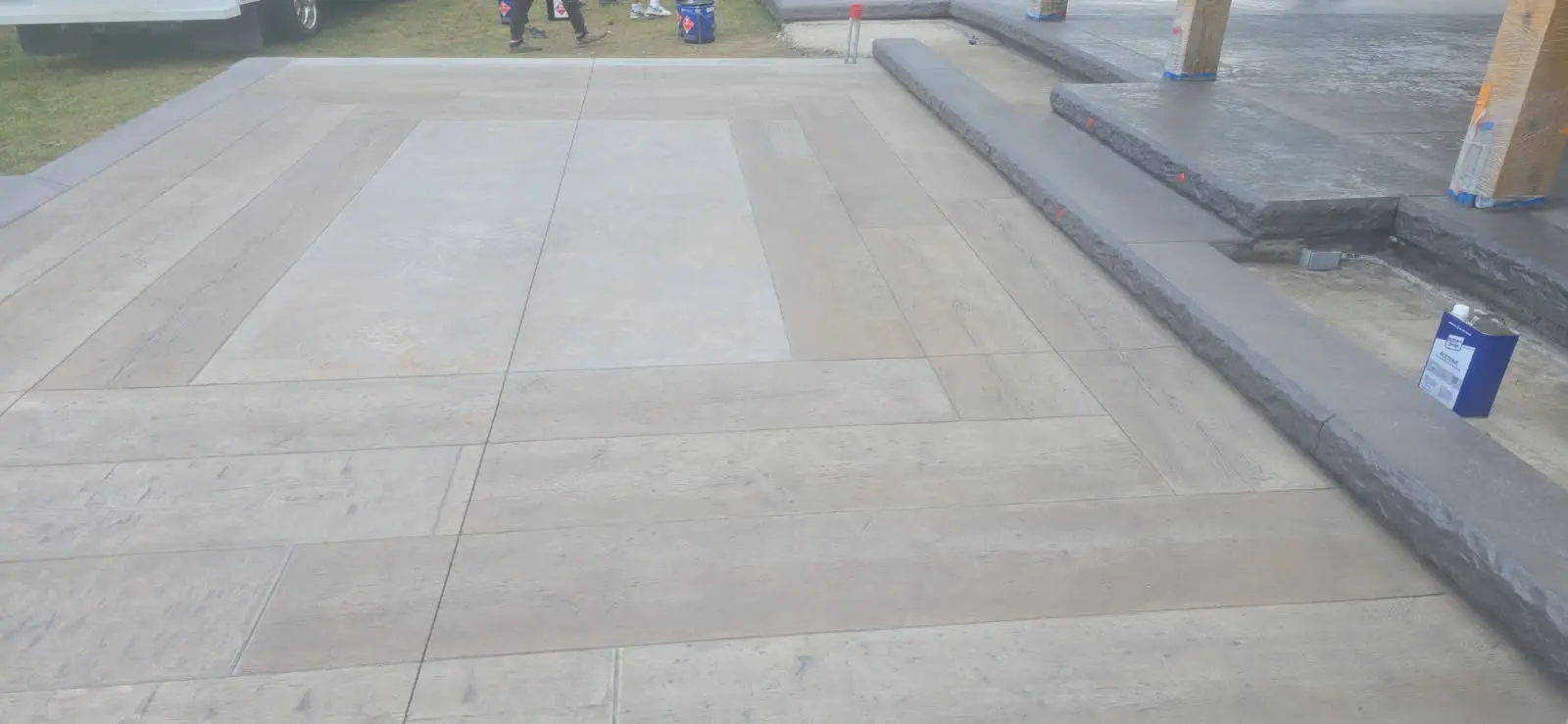
Every photo is our own crew's work across Gwinnett County and North Fulton.
Before you ask
Traditional Concrete questions
Something not covered here? Call (404) 670-8273 — you'll get a person who actually pours concrete, not a call center.
How thick should a concrete driveway be?
Four inches over a properly compacted base handles ordinary cars. We go to five or six inches with heavier reinforcement anywhere trucks, RVs, trailers or delivery vehicles will run, and at the apron where the drive meets the road. Thickness is cheap compared to replacing a cracked slab, so we would rather spec up than shave the bid.
Do I need rebar, wire mesh or fiber?
It depends on the job. Fiber in the mix controls shrinkage cracking and is fine on many patios and walkways. Rebar on chairs is what we want under driveways, thicker pads and anything spanning variable soil, because it holds the slab together across a crack instead of just reducing the odds of one. Mesh is a middle option that only works if it is actually supported and stays in the middle of the slab, which is why we usually skip it.
Why did my old driveway crack so badly?
Almost always one of four things: no real base compaction, not enough thickness for the traffic, missing or badly placed control joints, or water added at the truck to make the concrete easier to finish. Any one of those will crack a slab in Georgia clay within a few years. Cracking is not random bad luck, which is also why a properly built replacement does not repeat it.
How soon can I drive on new concrete?
Foot traffic after 24 to 48 hours, passenger vehicles after seven days, and heavy trucks after 28 days on a standard residential mix. Concrete keeps gaining strength for weeks after it looks and feels finished, and the first week is when the surface is easiest to damage.
Do you pull permits for driveway work?
When a job requires it, yes. Driveway aprons and anything in the county right-of-way generally need a permit in Gwinnett and North Fulton jurisdictions, and additions with footings need inspections. We handle that paperwork as part of the project rather than leaving it with you.
Can you pour to match my existing concrete?
We can match thickness, finish direction and joint layout, and we dowel new work into the existing slab so the two move together. Color is a different matter — cured concrete has weathered for years, so a new pour beside it will read lighter for a season or two before it evens out. If an exact match matters, an overlay across both surfaces is the reliable way to get it.
Also worth a look
Related services
Traditional Concrete often gets paired with these on the same site visit — and we price them together so nothing gets poured twice.
Stamped Concrete
Ashlar slate, flagstone, cobblestone and wood plank textures poured, colored and sealed in one seamless slab.
View serviceConcrete Overlays
Bond a stampable or stained overlay over sound existing concrete — new finish, no demolition.
View serviceOutdoor Living
Patios, seating walls, fire pits, outdoor kitchens, steps and lighting designed as one connected space.
View service
Free estimate
Let's pour something you'll be proud of.
Send us a few details about your driveway, patio or floor and we'll come measure it, price it, and show you finish samples — free, with no pressure.
Start your project