
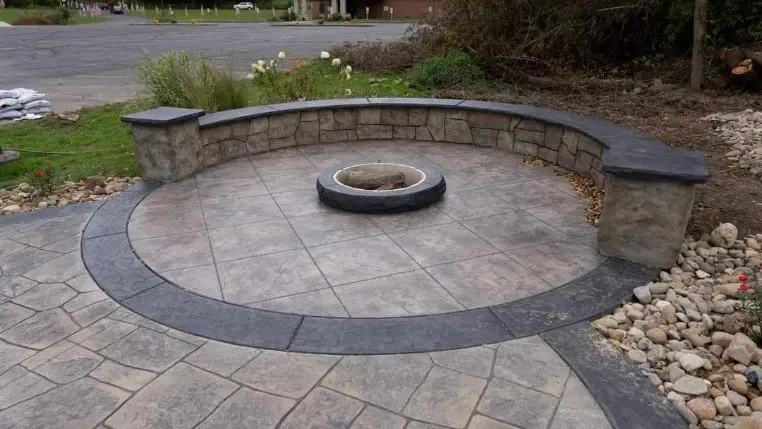
The look of stone, the strength of concrete
Stamped Concrete in Lawrenceville & Johns Creek, GA
One poured slab, textured and colored by hand to read like quarried stone — no pavers to shift, no joints for weeds, no gravel base sinking after three Georgia summers.
Dozens of stamp patterns and color hardener blends
Hand-detailed borders, bands and accent inlays
Sealed for UV, stain and freeze-thaw protection
Costs less than natural stone, lasts decades longer than pavers
Overview
Stone character, concrete economics
Stamped concrete starts as an ordinary pour and ends as flagstone, slate, cobble or weathered plank. While the slab is still plastic we broadcast color hardener across the surface, lay polyurethane texture mats into it, and hand-tool the joints, borders and edges the mats can't reach. What cures is a single monolithic slab wearing the face of a much more expensive material.
The practical difference shows up years later. A paver patio is a few hundred individual pieces sitting on compacted screenings — it settles unevenly, sprouts weeds in every joint, and needs re-leveling. A stamped slab is one reinforced piece of concrete. It moves as a unit, sheds water where we sloped it, and the only maintenance is a rinse and a fresh coat of sealer every few years.
We pour stamped work all over Gwinnett County and North Fulton — Lawrenceville, Suwanee, Duluth, Dacula, Johns Creek, Alpharetta and Roswell — for homeowners who want the back yard to look finished, not assembled.
Free estimate
Get stamped concrete priced on site
We measure, check drainage and access, put samples on the ground, and hand you a line-item price. No cost, no sales script.
- Licensed & insured
- Free on-site estimates
- Owner on every job site
- Written workmanship warranty
Mon – Fri: 7:00 AM – 6:00 PM
Saturday: 8:00 AM – 2:00 PM
Applications
Where stamped concrete earns its keep
Back patios & extensions
The most common request: replace a cramped 10×12 builder slab with a properly sized entertaining space, textured and bordered so it reads as intentional rather than added on.
Driveways & aprons
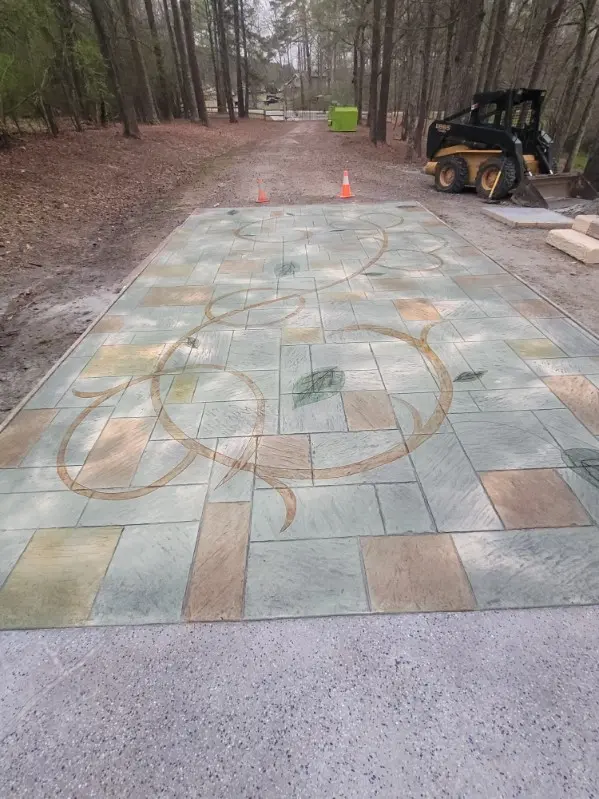
Stamped driveways poured at driveway thickness with reinforcement sized for vehicle loads. We usually keep the field pattern subtle and put the detail in a cobble or plank border along the edges.
Walkways & front entries
Curved front walks, landing pads and stoop surrounds. This is the highest-return stamped work on the house — it is the first thing anyone sees from the street.
Pool decks & coping
Texture mats give a pool deck grip without the abrasion of exposed aggregate, and we finish with a slip-resistant additive in the sealer for wet bare feet.
Steps, stoops & landings
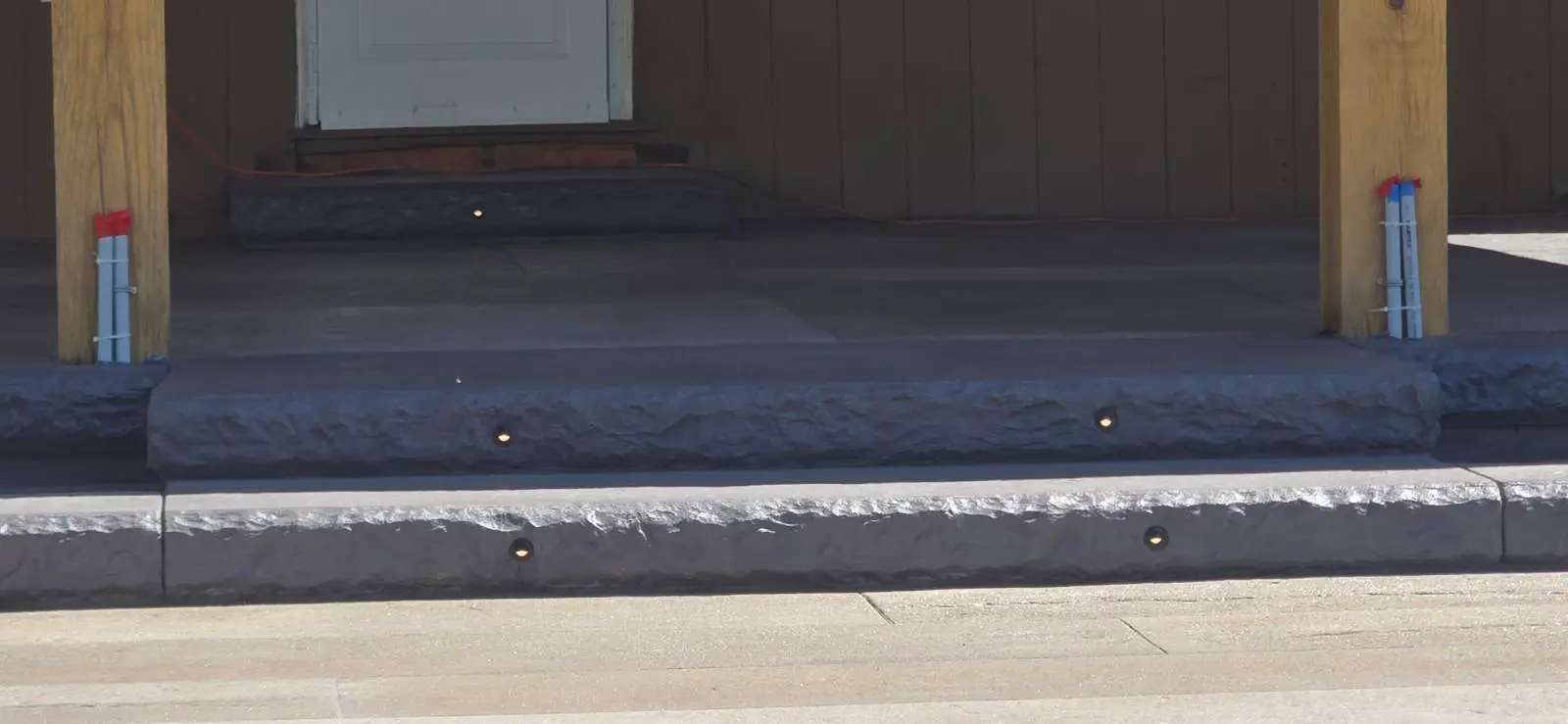
Treads stamped and colored to match the field, with hand-tooled risers so the pattern wraps the vertical face instead of stopping at the nose.
Porches & breezeways
Covered concrete stamped to coordinate with interior flooring, which visually pulls the inside of the house out onto the porch.
Your options
Patterns & color
We bring the mats and the color chips to your driveway and lay samples on the ground, in daylight, next to your brick and siding. Choosing a pattern from a phone screen is how people end up with a patio that fights the house.
Ashlar slate
Rectangular blocks in a repeating cut-stone layout. The safest, most architectural choice and the one that best matches brick and stone-front homes across the north metro.
Random flagstone
Irregular, organic stone shapes with a hand-cut edge. Reads softer and more natural, which suits wooded lots and curved patio shapes.
Cobblestone & European fan
Small-unit patterns for borders, bands, driveway aprons and circular accents. Rarely used across a whole field — extremely effective as trim.
Wood plank
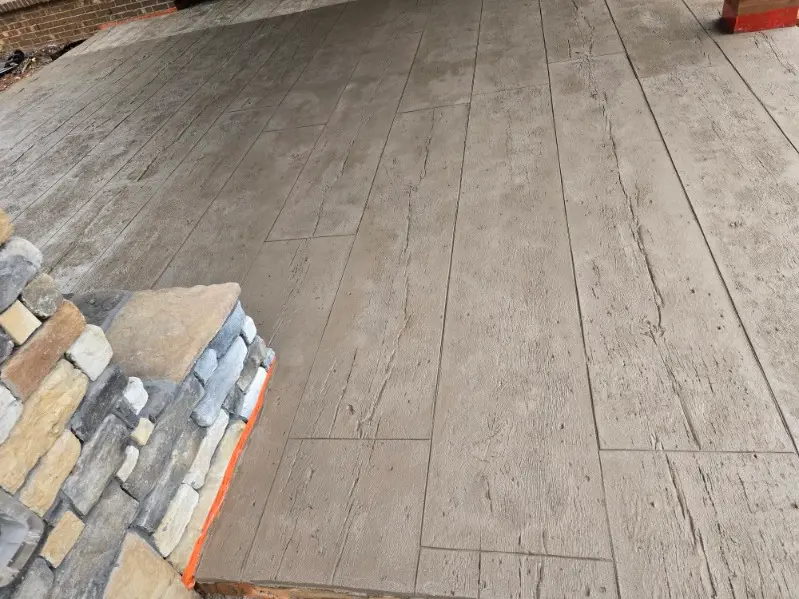
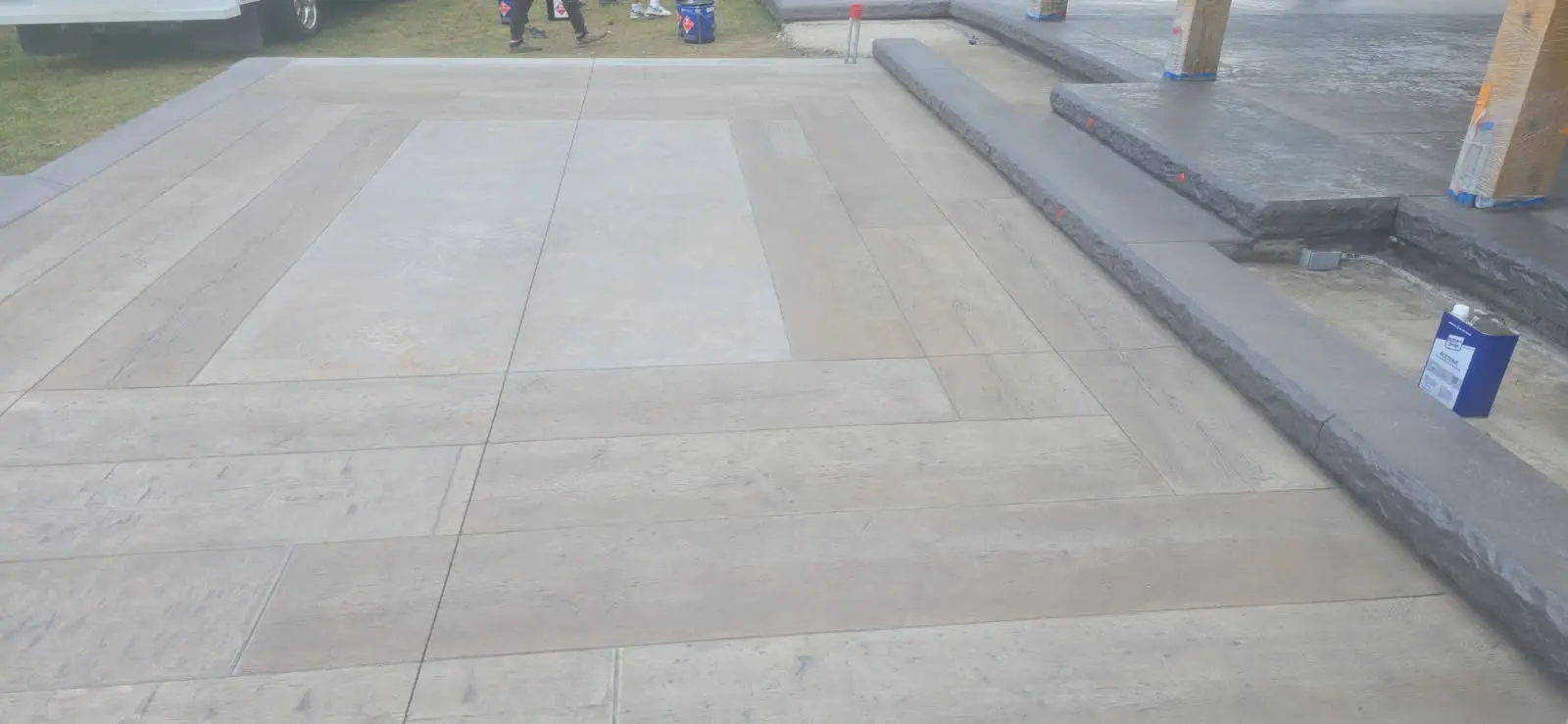
Grain-textured planks with staggered ends, stained in warm browns and greys. Gets you the look of a deck on a surface that never needs sanding, staining or a joist inspection.
Seamless texture
Skin mats that add a fine stone or slate texture without a joint layout. Best when you want tone and grip rather than a pattern, or when the space is broken up by too many angles for a repeating mat.
Color systems
Integral color in the mix for body tone, dry-shake hardener for surface depth and abrasion resistance, and a release agent that antiques the low spots so the pattern has shadow instead of looking printed.
Process
How a stamped pour actually goes
Layout, pattern & samples
We measure, mark the shape with paint, and set stamp and color samples on site. Slope and drainage get worked out here — every stamped surface pitches away from the house.
Tear-out & base prep
Old slab out and hauled away, sub-grade cut to depth and compacted, forms set to line and grade, and rebar or fiber reinforcement placed to spec.
Pour, color & float
Concrete placed, screeded and floated flat, then color hardener broadcast into the surface and worked in before the slab sets up.
Stamp window
The whole job hinges on timing. Stamp too early and the mats sink; too late and the texture won't take. We crew the pour so the entire field gets stamped inside that window, then hand-detail borders and edges.
Wash, antique & cut
Next day we pressure-wash the release agent off, leaving the antiquing in the grout lines, and saw-cut control joints where they belong — usually hidden inside a pattern line.
Seal & walk it
Once the slab is cured and dry we roll or spray sealer, add a slip additive on pool decks and steps, and walk the finished work with you before the final invoice.
Local conditions
Built for Georgia clay, sun and pollen
North Georgia red clay holds water and swells, then shrinks hard in an August drought. That movement is what cracks under-built slabs, so the base prep under a stamped patio matters more here than the pattern on top of it — cut to depth, compacted in lifts, reinforced, and jointed so any future movement lands in a saw cut instead of across your flagstone field.
We also get roughly fifty freeze-thaw cycles a winter in the Atlanta metro. Water that soaks into unsealed decorative concrete expands overnight and pops the colored surface off in flakes. Sealer is not a cosmetic upsell on stamped work; it is the wear layer.
Two more local realities: a dark charcoal patio in full afternoon sun gets genuinely hot underfoot, so we steer pool decks and barefoot areas toward mid-tone blends, and March pollen sits on a fresh slab like a yellow film. We schedule the final seal coat around it.
Stamped Concrete service area
Based in Lawrenceville, GA, we keep the radius tight so we can come back to check a cure, seal on the right day, or fix something years later.
Gwinnett County, GA
- Lawrenceville
- Suwanee
- Duluth
- Dacula
- Grayson
- Snellville
- Lilburn
- Buford
North Fulton, GA
- Johns Creek
- Alpharetta
- Roswell
- Milton
- Sandy Springs
Outside the list? Call (404) 670-8273 anyway — we travel for larger pours.
What drives stamped concrete pricing
Stamped concrete costs more than a broom finish and materially less than the natural stone it imitates. We price every job on site and hand you a line-item number rather than quoting a range that moves later.
- Square footage and how many curves, angles and radii the shape has
- Whether an existing slab has to come out and be hauled away
- Site access — a back yard the truck can reach versus wheelbarrowing 120 feet
- One color and one pattern versus multi-color fields with contrasting borders
- Steps, seating walls, fire pits and other vertical work tied into the pour
- Sealer system and whether a slip-resistant additive is called for
Keeping it looking new
We hand this over in writing at the walkthrough, along with the cure and sealing schedule for your specific job.
- Rinse pollen and clay dust off in spring with a hose or a light pressure wash.
- Reseal every two to three years — sooner on a driveway or full-sun pool deck.
- Skip rock salt and chloride deicers. Use sand for traction instead.
- Put felt pads or a paver under furniture feet and grill wheels to avoid point scarring.
- Blot oil, grease and fertilizer spills early; sealed concrete gives you time, but not forever.
Our work
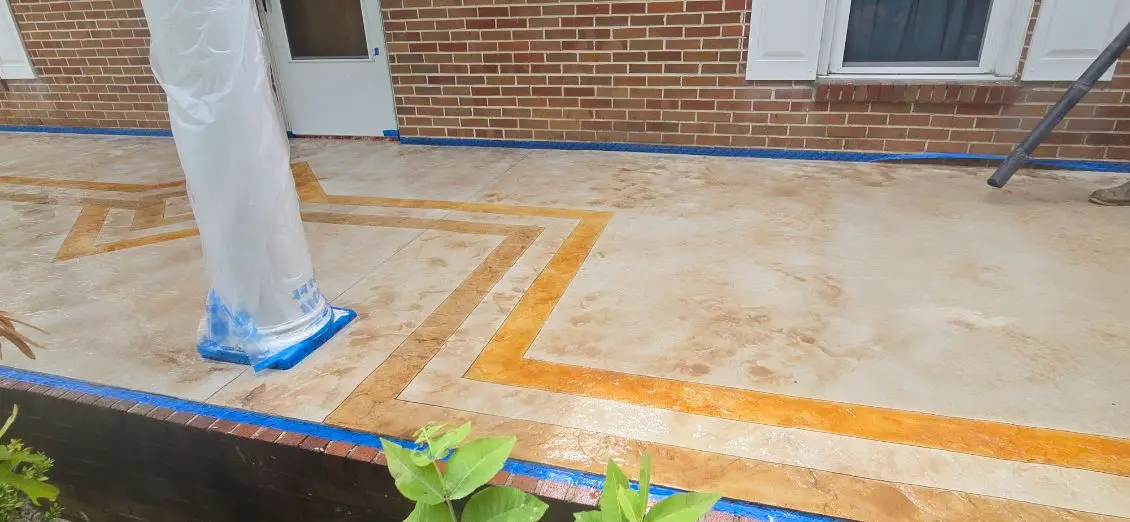
Stamped Concrete projects we've finished
Every photo is our own crew's work across Gwinnett County and North Fulton.
Before you ask
Stamped Concrete questions
Something not covered here? Call (404) 670-8273 — you'll get a person who actually pours concrete, not a call center.
Is stamped concrete slippery when it gets wet?
Texture helps, but sealer is what determines traction. On pool decks, steps and shaded walkways we add a fine polymer grit to the sealer, which keeps the surface grippy underfoot without making it uncomfortable to kneel on or hard to sweep. A glossy sealer with no additive on a wet pool deck is the mistake to avoid.
Will a stamped patio crack?
All concrete shrinks as it cures, so the honest answer is that we control where it cracks rather than promising it never will. That means a compacted base, correct thickness, rebar or fiber reinforcement, and saw-cut control joints placed on a proper spacing — usually tucked into a pattern line so you never notice them. Done that way, cracking shows up in the joints instead of across the middle of your flagstone.
Can you stamp over my existing concrete?
Yes, if the slab is structurally sound. That is a stampable overlay rather than a new pour: we clean and profile the surface, bond a new cementitious layer over the top, and stamp that. It costs less than tear-out and repour. If the existing slab is heaved, sinking or badly cracked, an overlay just inherits the problem and we will tell you to replace it instead.
How does the cost compare to pavers or natural stone?
Stamped concrete typically lands below installed pavers and well below natural flagstone or travertine on materials and labor. The bigger gap is lifetime cost — pavers need periodic re-leveling, joint sand and weed control, while a stamped slab needs a rinse and a coat of sealer every couple of years.
How long before I can use my new stamped patio?
Foot traffic is generally fine 24 to 48 hours after the pour, and furniture can go back once we have washed and sealed it. Driveways need about seven days before vehicles. We give you the exact windows for your pour, and we come back to seal at the right time rather than rushing it to close out the job.
Do you handle HOA approval paperwork?
We will give you what your architectural review committee asks for — dimensioned layout, pattern and color selections, and photos of comparable work we have done nearby. Plenty of Gwinnett and North Fulton neighborhoods require it, and most boards approve stamped concrete without issue once they can see the finish.
Also worth a look
Related services
Stamped Concrete often gets paired with these on the same site visit — and we price them together so nothing gets poured twice.
Concrete Overlays
Bond a stampable or stained overlay over sound existing concrete — new finish, no demolition.
View serviceOutdoor Living
Patios, seating walls, fire pits, outdoor kitchens, steps and lighting designed as one connected space.
View serviceTraditional Concrete
Driveways, patios, slabs and sidewalks with compacted sub-base, real reinforcement and a clean broom finish.
View service
Free estimate
Let's pour something you'll be proud of.
Send us a few details about your driveway, patio or floor and we'll come measure it, price it, and show you finish samples — free, with no pressure.
Start your project